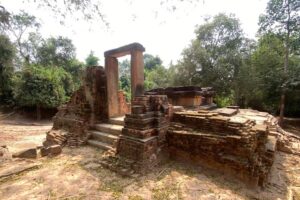
Bakong Temple
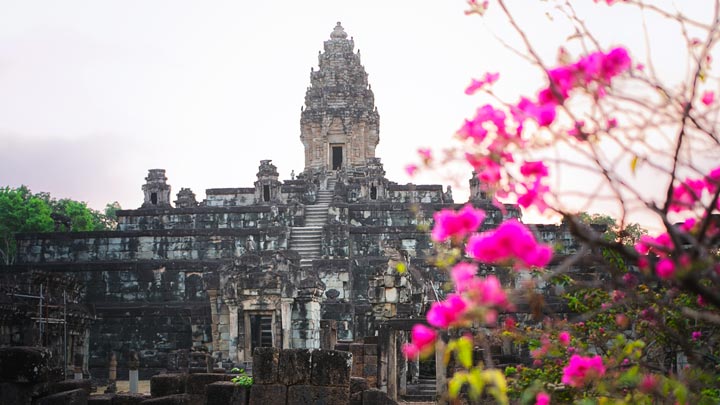
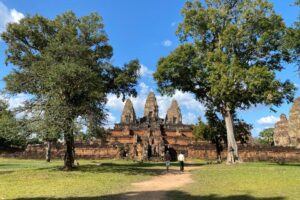
Bakong Temple is regarded as one of the earliest and most significant monuments of the Khmer Empire. Situated within the Roluos Group southeast of Siem Reap, the temple is widely recognized as the first true temple mountain constructed during the Angkor period.
Dating back to the late 9th century, Bakong once stood at the heart of Hariharalaya, the first major Khmer capital near Angkor. Its design symbolized Mount Meru, the sacred mountain of Hindu belief, and introduced architectural ideas that later shaped iconic temples such as Angkor Wat and Bayon.
Today, Bakong remains both an active religious site and an impressive historical attraction. Visitors can climb its pyramid structure, observe early Khmer carvings, and experience a peaceful atmosphere away from the busier Angkor temples.
Essential Information & Highlights
Main Highlights
- Earliest large-scale temple mountain of the Khmer Empire
- Constructed over two centuries before Angkor Wat
- Part of the historic Roluos temple complex
- Outstanding example of early Khmer engineering and design
- Quieter and less crowded than central Angkor temples
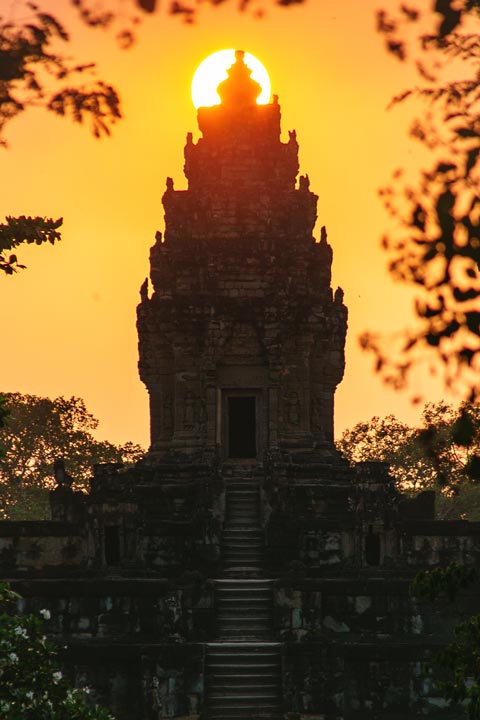
- Great location for photography and sunrise visits
The History of Bakong Temple
Bakong Temple was commissioned by King Indravarman I and completed in 881 AD as the royal state temple of Hariharalaya.
Dedicated to Shiva, the temple was designed to represent Mount Meru, which in Hindu cosmology is considered the center of the universe. The structure introduced the temple mountain concept, featuring ascending levels leading toward a central sanctuary symbolizing the path to the divine realm.
The temple’s construction used sandstone and laterite extensively, marking a significant development from earlier brick-based Khmer temples.
Bakong later became an architectural model for many of Angkor’s greatest monuments, including Baphuon, Bayon, and Angkor Wat.
Although parts of the upper sanctuary were restored during later periods, the temple still provides visitors with one of the clearest examples of the beginnings of classical Khmer architecture.
How to Reach Bakong Temple from Siem Reap
Bakong Temple lies around 15 kilometers southeast of downtown Siem Reap in the Roluos archaeological zone.
Transportation Options
Tuk-tuk
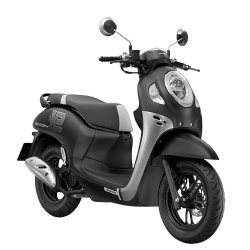
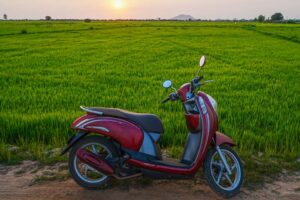
Rental scooter
Bicycle or guided cycling tour
Private taxi or car
The journey generally takes between 25 and 35 minutes.
Travelers pass through scenic countryside landscapes including rice fields, local villages, and traditional Cambodian homes along the route.
Many visitors combine Bakong with nearby Roluos temples as part of a half-day cultural tour.
Nearby Attractions
Preah Ko Temple
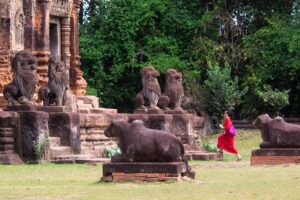
Built before Bakong, Preah Ko served as a royal ancestral temple under King Indravarman I. It is well known for its six brick towers and detailed decorative carvings.
Lolei Temple
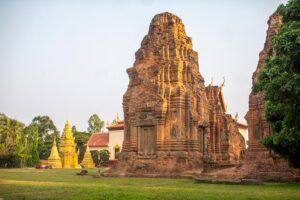
Constructed on a man-made island within an ancient reservoir, Lolei was completed during the reign of King Yasovarman I and features elegant brick architecture and historical inscriptions.
Rural Roluos Villages
The countryside surrounding Bakong offers peaceful scenery with rice paddies, stilted wooden houses, and opportunities to observe local Cambodian daily life.
Buddhist Pagodas Near Bakong
Several modern pagodas around the temple continue Cambodia’s long religious traditions and provide insight into contemporary spiritual life.
What It’s Like to Visit Bakong Temple
Bakong offers a very different experience compared to the larger temples inside the main Angkor complex. The atmosphere is calm, spacious, and less crowded, making it easier to appreciate the temple’s historical importance and architectural layout.
Visitors can climb the stepped pyramid for panoramic views of the surrounding countryside while gaining a closer understanding of early Khmer temple design.
The stone guardians, elevated causeway, and central sanctuary combine to create an atmosphere that feels both ancient and spiritual.
Because fewer tourists visit Bakong, it is also an excellent destination for photography and quiet exploration.
Frequently Asked Questions
Is Bakong Temple covered by the Angkor Pass?
Yes, entry to Bakong Temple is included with the Angkor Pass.
Why is Bakong historically important?
Bakong introduced the temple mountain architectural style that later became central to Angkor civilization.
How old is Bakong Temple?
The temple was completed in 881 AD and is over 1,100 years old.
How much time should visitors plan for Bakong?
Most travelers spend between 45 and 90 minutes at the site.
Can visitors climb the temple?
Yes, access to the upper levels is usually permitted depending on restoration and safety conditions.
Which nearby temples are best to visit together with Bakong?
Preah Ko and Lolei are commonly combined with Bakong because all three belong to the Roluos Group.